

This article is the first in a series exploring one question that has occupied my mind for much of this year: how do we rebuild Venezuela?
Over the past several months, I’ve been traveling to Venezuela, meeting founders, investors, engineers, and industry experts, while studying the country’s opportunities across multiple industries.
This series is my attempt to document that journey. I’ll share what I’m learning, the people I’m learning from, and why I believe rebuilding Venezuela will require far more than government policy. It will require entrepreneurs willing to build, investors willing to commit capital, and a global Venezuelan diaspora willing to reconnect its talent, experience, and networks with the country that shaped us.
The recent earthquake didn’t change that conviction. If anything, it made it more urgent.
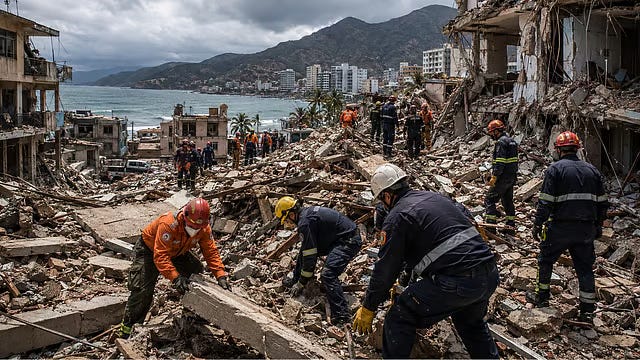
A few days ago, Venezuela experienced one of the most devastating natural disasters in its recent history. Two powerful earthquakes struck within seconds of each other, leaving destruction across several cities, including my hometown of Caracas and the neighboring coastal city of La Guaira.
Like many Venezuelans living abroad, I spent the next several hours staring at my phone, refreshing news feeds, and waiting for a message from home.
Telecommunications had gone down and it took almost five hours before I finally heard from my father. Those five hours reminded me how fragile certainty feels when the people you love are thousands of miles away. My family was fortunate but many others were not.
Over the following days, I couldn’t stop thinking about the families who never received the phone call they were waiting for. Families who lost loved ones, homes, businesses, or years of hard work in just a few minutes. My thoughts have been with them ever since and the images are truly heartbreaking. It has been a few tough and emotional days.
The timing of the earthquake made it especially emotional for me. Earlier this year I traveled back to Venezuela to attend Venezuela Tech Week and spend time with entrepreneurs, engineers, investors, and people working across different industries. It wasn’t meant to be a nostalgic trip. I wanted to understand the country through a different lens; one focused less on politics and more on its future.
When I returned home, I wrote about something I hadn’t felt in a long time: optimism. After nearly three decades of economic decline, institutional deterioration, and one of the largest migration crisis in modern history, I sensed that something had begun to shift. The conversations I had were no longer centered on surviving the next year. They were about building the next decade.
People were launching companies again. International investors were quietly paying attention. Members of the Venezuelan diaspora were beginning to ask not if they would ever contribute again, but how.
It wasn’t blind optimism. Venezuela’s challenges remain enormous, and everyone I spoke with understood that. But for the first time in years, rebuilding no longer felt like an abstract idea. It felt possible.
Then the earthquake happened.
The human and economic cost is difficult to comprehend. Reconstruction was already going to be one of the defining challenges of our generation, and now the country faces the additional burden of rebuilding homes, schools, hospitals, roads, and entire communities that had only just begun to look toward the future again.
As I watched the images coming out of Venezuela over the following days, my mind kept returning to the same question:
How can I help?
Not because I believe one person can solve problems of this scale, but because moments like these make it impossible to stand on the sidelines. Seeing the suffering and devastation reinforced something I had already been feeling for months: I want to be part of rebuilding my country.
Rebuilding a country isn’t only about restoring physical infrastructure. It’s about rebuilding opportunity, trust, institutions, and hope. It’s about creating reasons for people to stay, reasons for others to return, and reasons for the next generation to believe they can build a meaningful future at home.
I’ve spent a lot of time asking myself what role I can realistically play in that process. The truth is, I won’t rebuild bridges or apartment buildings. I won’t design public policy or restore the national electrical grid. But I can build businesses, I can create jobs, I can mentor young professionals, and I can invest my time in people who are choosing to build something meaningful.
Over the last few months, that’s become one of the driving motivations behind my own company. Not because one business can transform a country, but because thousands of businesses can. Economic recovery doesn’t happen through speeches or grand announcements. It happens when entrepreneurs hire their first employee, when engineers mentor younger engineers, when investors back founders willing to take risks, and when people choose to solve problems instead of waiting for someone else to solve them.
Those actions may seem small on their own, but multiplied across thousands of people, they become reconstruction.
One of the most encouraging moments this past week came while volunteering in Miami to help organize relief efforts for families affected by the earthquake. I was surrounded by people from different backgrounds, professions, and communities, all working toward the same goal. There was no concern about who received credit or whose idea was better. Everyone simply asked, “What needs to be done?” and got to work.
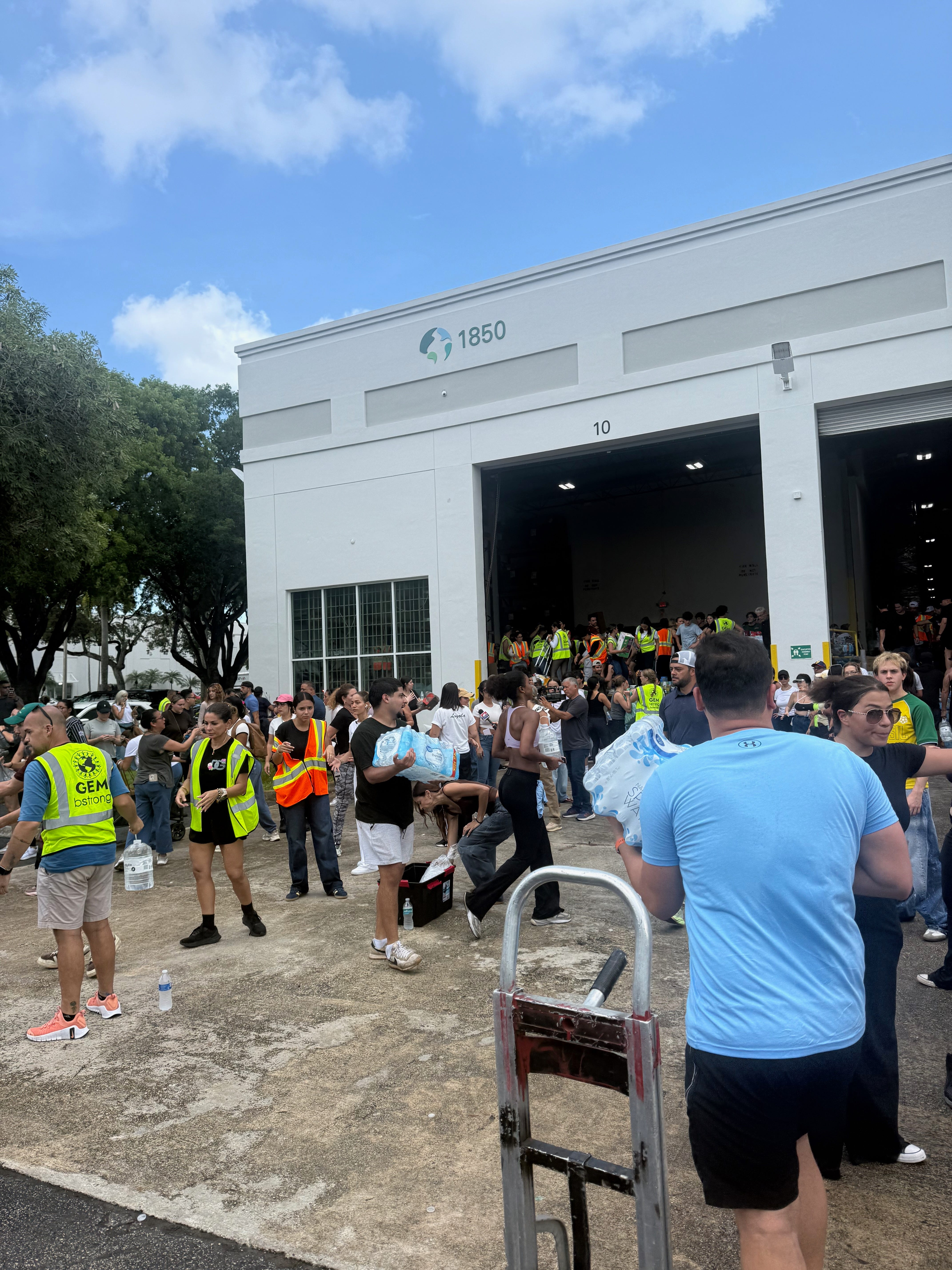
It reminded me that rebuilding always begins with people. Before governments, before infrastructure, and before investment, there has to be a shared sense of purpose. Communities recover because ordinary people decide they are going to help one another.
Those are the values I hope continue to shape Venezuela’s future: cooperation instead of division, integrity instead of corruption, and service instead of self-interest.
One story that has stayed with me over the years was Puerto Rico after Hurricane Maria. Red Ventures CEO Ric Elias launched a program to support the island recovery effort. Like every major disaster, the immediate priority was humanitarian aid. Food, water, medicine, and temporary shelter couldn’t wait. But what impressed me most came after the emergency phase with the launch of FWD787, an initiative that brought together Puerto Rican young talent living and working in the US to build companies, create jobs, and invest back into the island. Several friends of mine have been part of that initiative, and seeing the positive impact they’ve had over the years has been insipirational
Humanitarian aid helps people survive.
Economic opportunity helps communities thrive.
Over the past several months, I’ve found myself studying Venezuela in a way I never had before. I’ve been reading about our energy sector, our natural resources, our geography, our infrastructure, and the entrepreneurs already working to build the country’s future. Along the way, I’ve met founders, investors, engineers, and industry experts whose knowledge has challenged many of my assumptions and expanded my perspective.
What started as curiosity has gradually become a sense of responsibility. If I genuinely want to contribute to Venezuela’s reconstruction, then I have an obligation to understand where the country’s greatest opportunities lie and how someone with my background in technology and entrepreneurship can create meaningful value.
That’s ultimately why I’m writing this series.
Over the coming months, I’ll share what I’m learning as I continue exploring the opportunities I believe can play a meaningful role in rebuilding Venezuela. We’ll dive into the country’s energy ecosystem, the role artificial intelligence can play in accelerating development, the opportunities in agriculture, tourism, entrepreneurship, and infrastructure, and the conversations I’m having with people who have spent decades building businesses and industries in Venezuela.
I don’t claim to have all the answers. In fact, one of the goals of this series is to challenge many of my own assumptions. The more I learn, the more I realize how much I still don’t know. But I also believe that rebuilding Venezuela starts with understanding it, and understanding it requires curiosity, humility, and a willingness to learn from the people who have dedicated their lives to solving these problems.
My hope is that this series encourages more people (particularly those of us in the Venezuelan diaspora) to begin asking a different question. Not whether Venezuela can recover, but what role each of us can play in that recovery.
Some will build companies. Some will invest. Some will mentor. Some will return. Others may continue living abroad while creating opportunities from wherever they are. Every contribution matters, because rebuilding a country isn’t the responsibility of a government or a handful of business leaders. It’s the cumulative effect of millions of individual decisions made over many years.
The earthquake reminded me how fragile life can be, but it also reminded me why this work matters. It reinforced my belief that Venezuela’s future won’t be built by waiting for the right moment. It will be built by people who decide that, despite the challenges, their country is still worth investing in.
I hope you’ll join me on that journey.
Next: Why I’m Bullish on Venezuela.